A professional office furniture removal service helps when desks, cubicles, tables, or chairs are too large, unsafe, or slow to move. The right crew can plan pickup, clear work areas, handle heavy pieces, and sort usable materials. This keeps renovations, moves, and closures on track.
Table of Contents
- Why does outdated office furniture become a problem?
- Is your office renovation creating more furniture than you can handle?
- Are desks and workstations taking up valuable space?
- Do you have more office furniture than your team can move safely?
- Has a business closure or relocation left furniture behind?
- What should you do with unwanted cubicles and conference tables?
- Is office furniture blocking access, storage, or shared areas?
- How does a professional office furniture removal service work?
- How much does professional office furniture removal cost?
- How can you prepare for an efficient office furniture pickup?
- Frequently Asked Questions
- Key takeaways
- Conclusion
Why does outdated office furniture become a problem?
Outdated office furniture becomes a problem when it uses needed space, creates safety risks, or no longer suits the team. Broken chairs, damaged desks, and unused cabinets make a workplace harder to clean. They can also slow a move, remodel, or property handoff.
How worn or unused furniture affects workspace safety
Old furniture may have loose legs, sharp edges, broken wheels, or weak shelves. These issues can cause trips, cuts, or falling items. A damaged piece may also block a walkway or sit too close to a door.
A business does not need a professional for every small task. Staff can move light items when the path is clear and the furniture is safe. They should not lift heavy desks, glass tables, or full cabinets without proper help.
Common warning signs include:
- Furniture with broken frames, sharp edges, or loose parts
- Desks and chairs blocking paths or active work areas
- Filing cabinets filled with items no one needs
- Old pieces that no longer suit the office layout
- Furniture stored near doors, stairs, or shared access points
When storage becomes a costly temporary solution
Storage may seem easier than making a choice. Still, unused furniture needs space, handling, and future planning. It can fill a basement, loading area, or spare room that the business needs for active work.
A professional office furniture removal service can help Morgan Hill Junk Removal customers plan the next step. Some pieces may be reusable, while others may need recycling or disposal. In Morgan Hill, local rules and nearby facilities may affect how materials are handled.
Is your office renovation creating more furniture than you can handle?
An office renovation can create many unwanted items at once. Desks, chairs, partitions, tables, and storage units may need to leave before work begins. Planning removal early helps keep the work area clear.
Managing desks, tables, seating, and fixtures during renovations
A renovation plan should list each item that will stay, move, be donated, or leave. This keeps workers from moving the same furniture more than once. It also helps the removal crew understand the job before pickup day.
Clear loose items from desks and cabinets first. Keep personal records, electronics, keys, and company property with the business. Furniture attached to walls, floors, or power may need a qualified worker to disconnect it.
Do not place unwanted items in hallways while waiting for pickup. This can limit access and create a trip risk. A staging area is safer when it does not block doors, stairs, exits, or equipment.
Why removal planning should happen before construction begins
Plan removal before demolition or new work starts. Contractors need room to work, and bulky furniture can slow deliveries. It may also damage floors or finished surfaces when moved later.
Some office furniture contains glass, metal, wood, foam, or mixed materials. Sorting these parts can take more time than expected. A planned pickup helps the business stay on schedule without asking employees to rush.
Morgan Hill Junk Removal can help Morgan Hill businesses decide which items should leave first. A clear plan makes office furniture pickup easier for staff, contractors, and property owners.
Are desks and workstations taking up valuable space?
Desks and workstations may be ready for removal when they sit unused, crowd active areas, or no longer help the team. Extra furniture limits movement and can make a small office feel tighter. Removing surplus items creates room for useful work.
Recognizing when surplus furniture is limiting productivity
A workplace may have too many desks after remote work changes, a staff reduction, or a new floor plan. Empty stations collect dust and become storage spots for boxes. They can also make floors harder to clean and outlets harder to reach.
Modular workstations can be hard to manage. They may include panels, brackets, shelves, wire channels, and connecting parts. Keep these parts together if the furniture will be reused. If not, group them for easier removal.
A cleanout service is a planned removal of unwanted items from a property. It may cover one room, a full office, or several areas during a move. The business should decide whether it needs a small furniture pickup or a larger office cleanout.
Preparing modular desks and workstation components for pickup
Before pickup, remove files and personal items from every desk. Label anything that will stay in the building. Keep assembly instructions, keys, and special parts separate from items leaving.
Workers should not take apart furniture with wiring, glass, or heavy panels unless they know it is safe. A professional crew can review the pieces and decide what needs disassembly. This helps protect walls, floors, and nearby equipment.
The best plan matches the furniture to the available space. The main Morgan Hill area includes Downtown Morgan Hill, Jackson Oaks, Gilroy, San Martin, Coyote, Hollister, and nearby communities. Businesses can arrange help for office furniture, bulky items, and other workplace junk without leaving pieces in public areas.
Do you have more office furniture than your team can move safely?
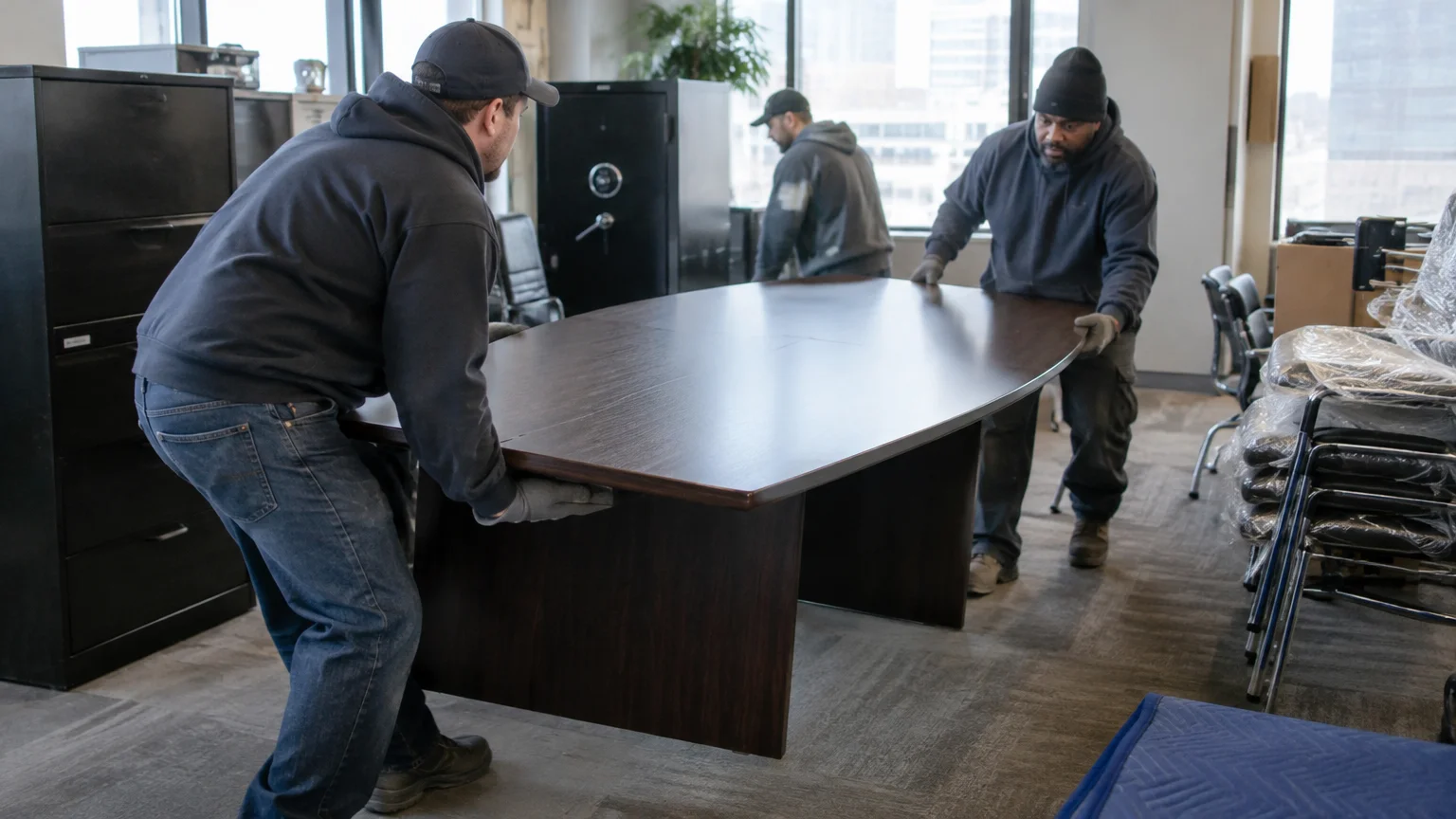
A business needs professional help when furniture is heavy, awkward, damaged, or hard to carry through the building. A team should not risk an injury to save time. Safe removal also protects walls, floors, doors, and other property.
Common lifting and handling risks with bulky workplace items
Office furniture can be hard to balance. A desk may be wide but light, while a full cabinet may be narrow and very heavy. Glass conference tables can break in tight halls or near stairs.
Employees also face risks when they move furniture without enough people or the right tools. Twisting while lifting can strain the back. Carrying items down stairs can harm workers and the building.
A professional crew may be useful when furniture involves:
- Heavy desks, cabinets, safes, or conference tables
- Long pieces that cannot turn easily through doorways
- Glass, sharp metal, or unstable parts
- Upper floors, basements, stairs, or narrow hallways
- Items that need careful loading near finished surfaces
Why professional crews help protect employees and property
A trained crew can plan the route before moving large pieces. The crew can protect door frames, floors, and walls while carrying items out. It can also separate furniture from other junk during loading.
Simple upkeep remains a do-it-yourself task. Employees can empty drawers, remove labels, and gather small office items. They should leave heavy lifting, hard disassembly, and unsafe access to people equipped for the work.
For a business in Morgan Hill, local help can reduce the time bulky furniture stays in the way. It also gives owners and managers one clear plan for a difficult removal job.
Has a business closure or relocation left furniture behind?
A closure or relocation often leaves more furniture than expected. Former offices may contain desks, chairs, shelves, cubicles, and tables that no longer have a use. A removal plan can help meet a lease, sale, or move-out deadline.
Creating a removal plan for move-out deadlines
Start by inspecting every room. Check offices, conference rooms, break areas, storage rooms, basements, and loading spaces. List large items and mark anything belonging to a new tenant or property owner.
Check drawers and cabinets for records. Sensitive documents need secure handling under the company’s own rules. Computers, monitors, phones, and other electronics may need a separate recycling plan.
A move-out checklist should include:
- Furniture that must leave the property
- Items that will remain for the next occupant
- Access points, elevators, stairs, and loading areas
- Building rules for pickup and removal work
- The date when the property must be empty and clean
Handling furniture left by former tenants or occupants
Property owners should confirm who owns abandoned furniture before arranging removal. A lease, written notice, or local rule may affect the next step. When ownership is clear, the owner can sort useful items from damaged pieces.
Large cleanouts often include more than furniture. A team may find old appliances, boxes, shelving, carpet, and general junk. Separate plans may be needed for materials that cannot go with normal furniture.
Morgan Hill Junk Removal can help property owners organize a practical office furniture removal plan. The goal is a clear space ready for its next use.
What should you do with unwanted cubicles and conference tables?
Sort unwanted cubicles and conference tables by condition, material, size, and reuse value. Reusable pieces may go to another office or donation group. Damaged materials may need recycling or disposal through an approved facility.
Separating reusable, recyclable, and disposal-bound items
A simple sorting process keeps choices clear. First, set aside clean and usable furniture. Next, group metal, wood, cardboard, and other materials when practical. Finally, identify pieces that are broken, stained, unsafe, or too damaged to reuse.
Do not assume every item belongs in a regular dumpster. Large tables may need special handling, and mixed-material cubicles can be hard to separate. Local facilities may have their own rules for commercial waste.
The phrase free furniture removal can sound appealing, but businesses should check what any service includes. Item type, access, availability, and local disposal rules can affect whether a provider accepts furniture.
Why oversized furniture may require specialized handling
Conference tables often have wide tops, heavy bases, or glass sections. Cubicles may include connected panels and electrical channels. These features can make removal harder than moving one desk or chair.
A crew may need to disassemble parts, protect the route, and load materials in a safe order. It may also need to work around elevators, tenants, customers, or active employees. Planning matters when the office stays open during pickup.
Responsible removal means keeping reusable items separate when possible. It also means avoiding unsafe dumping or leaving large furniture beside a public road. Morgan Hill area customers can ask about a removal plan that fits the property and items.
Is office furniture blocking access, storage, or shared areas?
Office furniture should be removed when it blocks hallways, loading zones, exits, storage areas, or shared workspaces. Even furniture that is not broken can cause problems when it limits safe movement. Clear access matters during normal work and emergencies.
Clearing hallways, loading areas, and emergency access routes
Keep hallways and doorways open whenever possible. Furniture near an exit can slow people down when they need to leave. Items in loading areas can also interfere with deliveries, maintenance, or emergency response.
Managers should not use stair landings or exit paths as long-term storage. A quick staging spot can become a lasting hazard when no pickup date exists. Moving items to a safe, approved area is better than shifting the problem.
Businesses can remove small, light items when the route is safe. Large or unstable furniture needs a better plan. A professional crew can review the route and choose a safe way to move each piece.
Removing bulky items from basements, upper floors, and tight spaces
Basements and upper floors often make furniture removal harder. Stairs, low ceilings, narrow doors, and limited parking can slow the job. Elevators may have weight limits or building rules.
Before pickup, clear loose objects from the route. Protect important files and tell the crew about locked doors, security steps, or access limits. Clear information helps prevent delays.
Office furniture removal companies may offer different service levels. Ask what the crew will move, whether disassembly is included, and how items will be handled afterward. A clear scope helps everyone understand the plan.
How does a professional office furniture removal service work?
A professional office furniture removal service usually starts with an assessment of the items, access points, timing, and removal needs. The crew then prepares furniture, moves it safely, loads it, and sorts it for reuse, recycling, or disposal when possible.
What happens during assessment, preparation, and pickup
During the assessment, the business explains what must leave and what must stay. The crew may review photos, rooms, stairs, elevators, parking, and loading access. It should also learn about building rules and any deadline.
Preparation starts by removing personal property, records, and items outside the job. The business can label furniture that stays. The crew can then focus on the agreed items instead of sorting unrelated materials.
On pickup day, furniture may leave in stages. Small pieces can leave first and open a path for larger ones. Heavy or fragile pieces may need extra care and more than one person.
How crews manage disassembly, loading, and responsible disposal
Some furniture can move whole. Other pieces need partial or full disassembly before they fit through doors. A crew should use a safe method that protects the building and keeps small parts together.
Loading works best when items are placed in a stable order. Reusable pieces should stay protected from damaged materials when possible. Metal, wood, cardboard, and other materials may be separated for the next handling step.
Professional junk removal services can also help with related items after an office move. These may include shelving, old appliances, boxes, or bulky junk. Ask about each item instead of assuming every material follows the same process.
How much does professional office furniture removal cost?
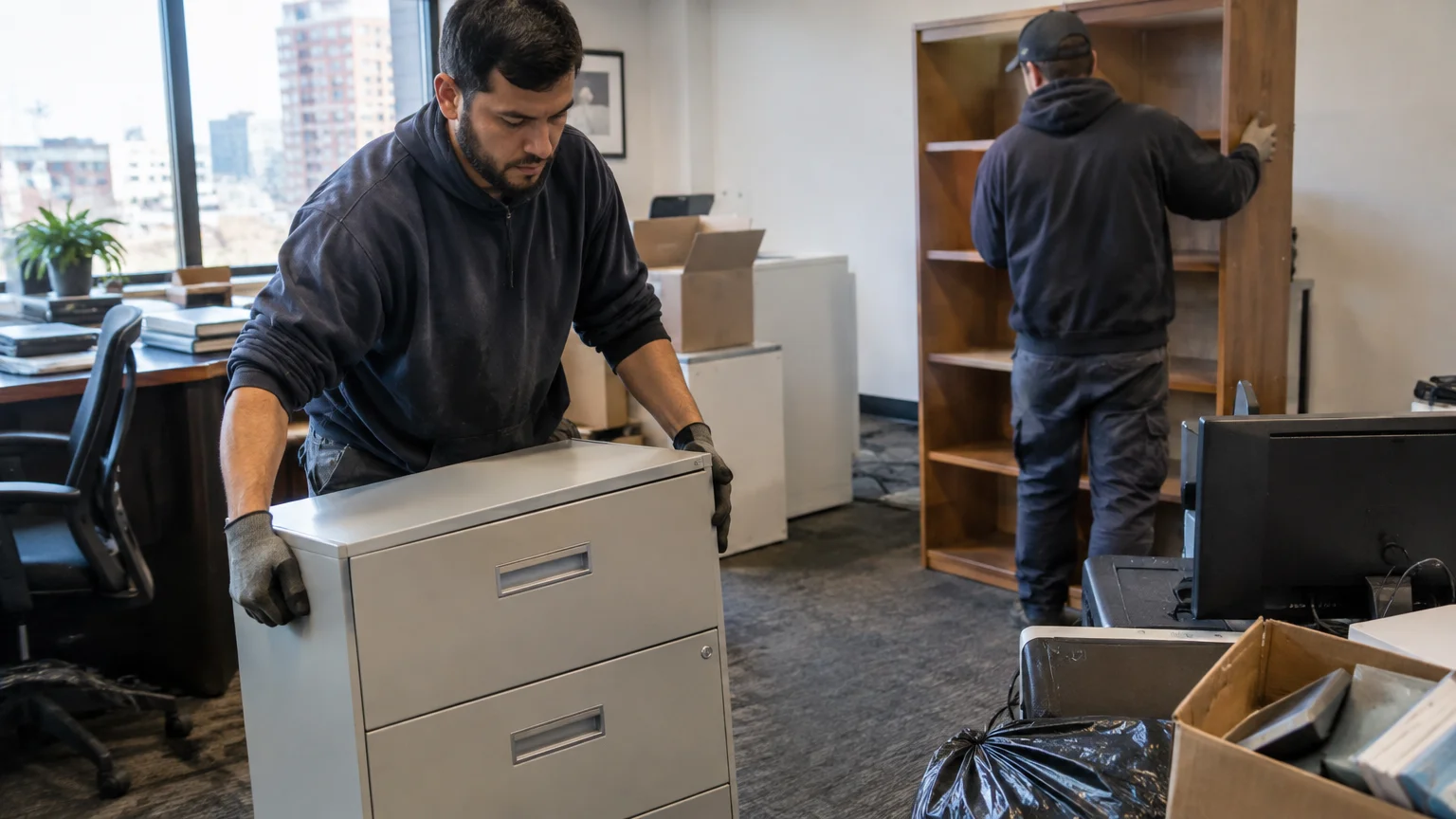
The final quote for professional office furniture removal depends on the amount, size, weight, access, labor needs, urgency, and handling needs. A few chairs are usually simpler than a full office cleanout. A large, difficult job may need more planning and crew time.
Which factors influence the final removal quote
The number of items is only one part of the work. A small but heavy safe may take more effort than several light chairs. Stairs, long carry paths, tight halls, elevators, and limited loading access can also change the work involved.
Furniture condition matters too. A clean desk may move whole, while a damaged cubicle may need careful disassembly. Glass, mixed materials, electronics, and items needing separate handling can affect the removal plan.
Businesses should request a clear quote after sharing important details. The final cost is confirmed on a quote from the chosen provider. Each removal company sets its own terms, so office owners should compare the service scope rather than rely on a general estimate.
How office furniture removal compares with handling items in-house
Handling furniture in-house may work when there are only a few light pieces. It becomes harder when staff must lift heavy items, arrange vehicles, protect the property, and find a proper place for materials.
A professional service may save staff time and reduce lifting risks. It can also help a business meet a move-out or renovation deadline. The best choice depends on the furniture, building, team, and schedule.
Morgan Hill Junk Removal can explain the removal steps for businesses. Service terms and the planned work should be reviewed before scheduling.
How can you prepare for an efficient office furniture pickup?
An efficient office furniture pickup starts with sorting items, clearing access, protecting company property, and choosing a workable pickup window. Good preparation helps the crew move faster. It also reduces confusion about what should leave.
A practical checklist for sorting and clearing furniture
Walk through the property before pickup. Identify every item, remove personal property, and mark furniture that stays. Someone should also confirm who can approve changes if the crew finds an item not on the list.
Before the crew arrives, the business should:
- Empty drawers, cabinets, shelves, and desk surfaces
- Remove records, keys, electronics, and personal belongings
- Label furniture that must stay in the building
- Clear paths through offices, halls, stairs, and loading areas
- Confirm building access, parking rules, and elevator limits
- Tell the crew about glass, wiring, damage, or unusual items
When to schedule removal before a deadline or property handoff
Schedule removal before the last possible day. A small delay can affect cleaning, construction, inspection, or key handoff. Early planning also gives the business time to address items needing special handling.
A property owner may need the space empty before a new tenant arrives. A contractor may need clear rooms before work begins. A manager may need to keep the office open during removal. The schedule should match these needs.
A written list, clear access plan, and confirmed scope can make pickup easier. Morgan Hill Junk Removal can help plan office furniture removal across the main Morgan Hill area, including Downtown Morgan Hill, Jackson Oaks, Gilroy, San Martin, Coyote, Hollister, and nearby communities.
Frequently Asked Questions
What is included in office furniture removal?
Office furniture removal may include desks, chairs, cubicles, tables, shelving, cabinets, and other bulky workplace items. The exact service depends on the provider and agreed scope. Explain the item types, building access, disassembly needs, and disposal concerns before scheduling pickup.
Can a removal crew take furniture from an upper floor?
Many crews can remove furniture from upper floors, basements, and buildings with stairs. Access affects the work plan, so share details about elevators, narrow halls, parking, and building rules. Large or fragile pieces may need extra preparation before they leave safely.
Should office furniture be taken apart before pickup?
Not always. Some desks and cubicles move safely as complete units, while others need disassembly. Staff can remove loose items and personal property, but heavy or complex furniture may be better handled by the removal crew. This helps protect workers, walls, floors, and furniture parts.
Can old office furniture be reused or recycled?
Yes, some office furniture can be reused, donated, or recycled when it is clean and in working condition. Metal, cardboard, and some wood parts may have separate handling options. Damaged or mixed-material pieces may require disposal. The provider can explain which options fit the items and location.
When should a business book furniture removal?
Plan removal before a renovation, relocation, closure, lease deadline, or property handoff. Early scheduling gives the team time to sort records, clear access, and identify special items. It also lowers the chance of leaving bulky furniture until the final day.
Key takeaways
- Hire professional help for heavy, fragile, damaged, or awkward furniture.
- Plan removal before renovations, moves, closures, and property handoffs.
- Keep halls, exits, stairs, and loading areas clear during the process.
- Sort usable, recyclable, and disposal-bound items before pickup.
- Staff can handle light tasks, but difficult lifting and disassembly need care.
Conclusion
Eight common signs point to a need for professional office furniture removal: unsafe pieces, crowded work areas, renovations, staff moves, business closures, blocked access, oversized furniture, and tight deadlines. A planned service can help protect employees and property while keeping the office on schedule.
Businesses do not need professional help for every light item. They can empty drawers, label furniture, and clear small objects themselves when it is safe. Heavy lifting, difficult access, fragile materials, and large cleanouts call for a more careful plan.
For office owners and property managers, Morgan Hill Junk Removal can help organize the next step. Contact us to arrange an office furniture pickup that fits the property, items, and schedule.