To prepare for office furniture pickup, make an item list, decide what stays, and clear personal items and private files. Check doors, halls, elevators, and loading areas before the pickup day. Then share the plan with Morgan Hill Junk Removal so furniture can leave with less noise, fewer delays, and less risk to your team.
Table of Contents
- What should you do before scheduling office furniture pickup?
- How can you decide which office furniture to remove?
- How should you prepare office furniture for removal?
- How can you protect employees and the workplace during pickup?
- What should businesses know about disassembling office furniture?
- How does office furniture pickup usually work?
- What final checks should you complete after office furniture removal?
- Key takeaways
- Frequently Asked Questions
- Conclusion
What should you do before scheduling office furniture pickup?
Before you schedule a pickup, list the furniture, set the job size, and choose a good time. A clear plan helps the removal team know what must leave and how to reach it. It also helps office managers avoid changes on pickup day.
Create a complete inventory of unwanted furniture
Walk through each room and write down every item that should go. Include desks, cubicles, chairs, filing cabinets, shelves, conference tables, reception pieces, and breakroom furniture. Note items that are large, fixed in place, damaged, or stored in another room.
Your list can show the item name, room, number, and condition. Photos may help when many pieces look alike. Mark every item that must stay. For a large workplace, a room-by-room list is easier to check than one long list.
Look in places that are easy to miss. Storage rooms, supply closets, basements, and loading areas may hold old furniture. A full walk-through helps prevent surprise items after the pickup has been planned.
Confirm the pickup scope and timing
Decide if the job covers one room, one floor, or the whole office. Also decide if the team will take furniture only or manage a wider office cleanout. Clear details help the provider plan workers, loading space, and tools.
Pick a time that fits the workday. Some offices choose early morning, late afternoon, or a period with fewer visitors. Building rules may limit elevator use, loading dock access, parking, or loud work. Morgan Hill Junk Removal can help Morgan Hill businesses review the plan before the date is set.
Ask the building manager about move rules early. Some buildings require a certificate, a loading reservation, or floor protection. Finding this out before pickup can prevent a long wait when the team arrives.
How can you decide which office furniture to remove?
Sort office furniture into three groups: keep, reuse, and remove. This makes choices easier and helps protect useful items from being taken by mistake. It also gives the pickup team a simple plan to follow.
Separate reusable, recyclable, and unwanted items
Reusable furniture may include clean desks, sound chairs, shelves, or tables that fit another room. You may move these items, store them, or offer them to a local group. Reuse is often a good choice when furniture is safe and in good shape.
Some pieces contain metal, cardboard, wood, or plastic that may be sorted. Local rules differ by material and facility. A professional furniture removal team can explain which pieces may be reused or sorted and which need another form of handling. Keep furniture with sharp edges, broken frames, or heavy mold away from items meant for reuse.
Unwanted items are pieces that no longer help the business and have no clear next use. Mark them with removable labels. Words such as “remove” and “keep” are easy for everyone to understand.
Do not place labels where they may damage a finish. Use tape that comes off cleanly, or use a room map instead. This small step helps protect furniture that should remain in the office.
Account for desks, cubicles, chairs, and bulky pieces
Office furniture often has many connected parts. A workstation may include a top, legs, drawers, panels, shelves, and cable trays. A cubicle may have walls, posts, work surfaces, and upper storage. Listing each part helps prevent missing pieces.
Large conference tables and reception desks need extra care. Measure narrow doors, halls, and turns when an item is very large. A bulky piece may need to move in sections, ride on a dolly, or use another exit.
Chairs and small pieces are easy to miss under desks or in storage areas. Add them to the list. This matters during an office move, remodel, downsizing job, or office cleanout.
How should you prepare office furniture for removal?
Before pickup, employees should empty furniture and remove items that do not belong with it. Check drawers, shelves, cabinets, and desk spaces one at a time. This protects personal items, records, and small devices from being taken by mistake.
Empty drawers, shelves, and storage compartments
Open every drawer and cabinet, even sections that are locked or rarely used. Check behind shelves and under removable trays. Small items such as keys, pens, chargers, tools, and business cards are easy to overlook.
Put anything that must stay in a marked box or another office. Do not leave loose items inside furniture unless the work plan includes them. Empty furniture is also safer to lift because its contents cannot shift.
If a filing cabinet is heavy, employees should not carry it alone. Remove its contents first, then let trained workers move the cabinet. Keep the keys with the office manager unless the cabinet is part of the pickup.
Check the floor around each item as well. Cords, boxes, and small tools can fall behind desks. Removing these items gives the crew a safer path and helps prevent lost property.
Remove personal items, electronics, and sensitive documents
Employees should take home or store personal belongings before pickup day. This includes photos, plants, small appliances, notebooks, and decorations. The same rule applies to monitors, phones, printers, and docking stations unless they are listed in the work plan.
Sensitive documents need special care. Remove paper files, client records, payroll details, passwords, and other private material before furniture leaves. Follow the company’s document destruction policy instead of putting private records in normal bins.
A final desk sweep can prevent mistakes. Each employee can check the top, drawers, underside, and nearby floor. This simple step protects privacy and reduces the need to search through a loaded truck.
Keep digital data safe, too. Sign out of devices, remove storage cards, and follow company rules for old computers. If electronics are part of the job, tell the team before pickup so they can plan for them.
How can you protect employees and the workplace during pickup?
The workplace needs clear paths, safe access points, and a plan for people who remain on site. Good preparation lowers trip risks and keeps removal work away from normal business activity. It also helps protect walls, doors, floors, and finished surfaces.
Clear pathways and identify access points
Remove boxes, cords, bins, plants, and loose items from halls. Identify the best entrance, elevator, loading zone, and truck position. Tell the team about stairs, narrow turns, security doors, and areas they cannot use.
Protect floors and walls when the building requires it. Building managers may have rules for elevator pads, carts, loading docks, or move times. Confirm those rules before the appointment, not when workers arrive.
A clear path should run from each furniture group to the exit. If a route crosses a busy work area, mark it and keep people away during loading. Never block fire exits, sprinkler controls, electrical panels, or required access routes.
Check doors before the team arrives. Prop open doors only when allowed, and keep access cards or keys ready for the office contact. This helps the crew move through the building without stopping to search for access.
Plan around employees, customers, and daily operations
Tell employees when removal will happen and which areas they should avoid. Customer-facing businesses may choose a quiet time so visitors do not enter the work zone. Offices with calls or meetings may need a temporary work area.
Choose one person to answer questions and approve changes. This person can confirm which items are included and help the team enter locked rooms. Other employees should not move furniture while the crew is working.
Use signs or cones to show closed areas. Keep pets, visitors, and children away from loading work. These steps help Morgan Hill Junk Removal work safely for offices in the main Morgan Hill area, including Downtown Morgan Hill and Jackson Oaks, as well as Gilroy, San Martin, Coyote, Hollister, and nearby communities.
If work must continue during pickup, set a safe boundary first. Keep phones, meetings, and customer service away from the moving path. A short pause in one area can help the whole job finish with less disruption.
What should businesses know about disassembling office furniture?
Disassemble furniture only when it is safe and helps it leave the building. Small desks may move whole, while large workstations, cubicles, and conference tables may need to come apart. The best choice depends on size, weight, design, and the route outside.
When to disassemble desks, cubicles, and conference tables
A desk may need disassembly if it cannot fit through a doorway or turn in a hall. A large conference table may need its legs or sections removed. Cubicles often require panels, posts, shelves, and work surfaces to be separated.
Do not force a piece through a tight space. This can damage the furniture, building, or people nearby. If an item is attached to a wall or floor, confirm who will remove the attachment before pickup.
Follow the maker’s design when possible. Do not cut panels, bend metal, or break parts apart just to save time. Safe removal matters more than making an item smaller.
Ask about built-in wiring before taking a workstation apart. Some desks have power lines or data cords attached. A qualified person should handle any electrical work that the building rules require.
What to do with hardware, panels, and components
Keep screws, brackets, keys, and small hardware in a marked bag when furniture may be reused. Place the bag with the matching desk or cabinet. If furniture will be discarded, gather loose parts so they do not create a trip hazard.
Keep panels and components with the right furniture group until the pickup team checks them. Some parts may be reused, while others may be sorted as bulky material. Tell the team about missing pieces, damage, or parts that must stay in place.
When you are unsure, ask whether the removal provider handles disassembly. Morgan Hill Junk Removal can help property owners and professionals decide what to prepare before workers arrive.
How does office furniture pickup usually work?
Office furniture pickup often starts with a walk-through. The team then removes, loads, and sorts the items. The process may change based on the building, furniture type, and access conditions.
What happens when the removal team arrives
A chosen office contact should meet the team and review the inventory. This person can point out items to remove, items to keep, and rooms with special access rules. A short review helps prevent confusion before lifting starts.
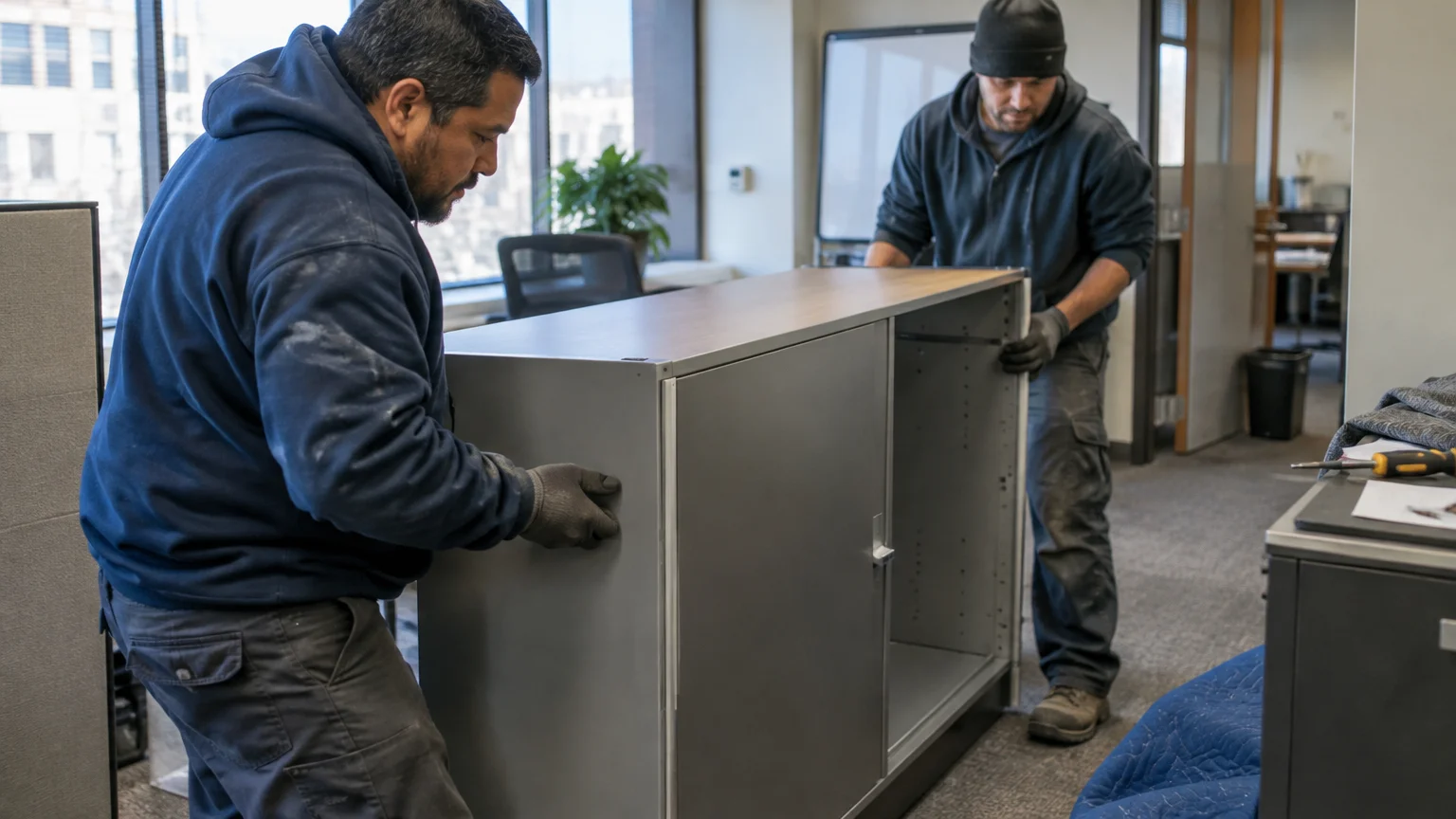
The team may inspect doors, elevators, stairs, and the loading area. Furniture is moved in a careful order. Workers may start with pieces near the exit or items that need more room. Employees should stay clear of the route during the work.
If the list differs from the furniture on site, the office contact can decide what happens next. Clear approval prevents the removal of property that was meant to stay.
How loading, sorting, and disposal are handled
Furniture is loaded so heavy pieces stay stable and lighter items remain protected. Components may be grouped by material or kept together when they can be reused. The provider may sort suitable items for reuse, recycling, donation, or another approved option.
Do not assume every facility accepts every item. Mattresses, appliances, electronics, and pieces with special materials may have different rules. If an office cleanout includes these items, mention them before pickup.
The goal is a clear work area and a proper next step for unwanted furniture. A local team serving the Morgan Hill area can explain handling choices without asking office staff to manage the heavy lifting.
Share building limits before loading starts. For example, tell the team about time limits, dock rules, or areas that need extra care. Early notice helps the pickup stay on schedule.
What final checks should you complete after office furniture removal?
After removal, inspect each room, route, and storage area. The final check confirms that the right furniture is gone and that no personal items or loose hardware remain. It also helps the business plan the cleared space.
Inspect the workspace and confirm all requested items are gone
Compare the empty rooms with the first inventory. Check behind doors, under counters, inside storage areas, and near loading points. Look for missed items, furniture that should stay, or parts placed in the wrong area.
Walk the removal path, too. Check floors, walls, doors, corners, and elevator areas for visible issues. Confirm that exits, electrical panels, vents, and other required access points remain clear.
If something needs attention, the office contact should mention it before the team leaves when possible. A final written note can help the business record what was removed and what remains.
Check that no private papers or small devices were left behind. Review desks, cabinets, and nearby floors one more time. This is especially helpful when several employees used the same work area.
Plan the next use of the cleared office area
Once the space is empty, decide how it will support the next business need. It may become a work area, meeting room, storage zone, training room, or open space for a remodel. Planning early helps stop the area from filling with random boxes.
Clean surfaces and floors as needed. Review the new layout with employees so desks, paths, and shared areas stay easy to use. If more items must leave later, start a new list instead of mixing them with furniture already removed.
A well-planned finish turns furniture removal into a useful workplace change. It can help the business move ahead without leaving old equipment in corners or storage rooms.
Key takeaways
- Make a full inventory of desks, cubicles, chairs, tables, cabinets, and other furniture.
- Sort items into keep, reuse, recycle, and remove groups before pickup day.
- Empty furniture fully and remove personal items, electronics, and private records.
- Clear paths and plan the time around employees, visitors, building rules, and daily work.
- Complete a final walk-through before the removal team leaves.
Frequently Asked Questions
Should employees empty desks before office furniture pickup?
Yes. Employees should remove personal items, electronics, papers, and anything else they need to keep. Drawers, shelves, and cabinets should also be checked. Empty furniture is easier and safer to move. Private records should follow the company’s document policy instead of being left inside furniture.
Can a removal team take apart office cubicles?
Many removal teams can handle cubicle parts, but ask before scheduling. Cubicles may include panels, posts, shelves, desks, and hardware. The team can then plan for the room and tools needed. Wall or floor attachments may need separate approval or building help.
How far ahead should an office plan furniture pickup?
The right lead time depends on the project size, building access, and work schedule. A small pickup may need less planning than a full office cleanout. Start once you know which items will leave. Early planning allows time for sorting, record removal, access rules, and employee notice.
What happens to unwanted office furniture after pickup?
Handling depends on the item’s condition, material, and local facility rules. Some furniture may be reused, donated, recycled, or sent for disposal. Share details about damaged items, electronics, appliances, or unusual materials before pickup. This helps the team plan the proper next step.
Can office furniture pickup happen while employees are working?
It may be possible, but the work area and moving path must stay clear. Many businesses choose a quieter period to reduce noise and interruptions. Tell employees which areas are closed and assign one person to guide the team. Building rules may also limit pickup times.
Conclusion
The easiest way to prepare for office furniture pickup is to plan before removal day. A full inventory, clear sorting choices, empty furniture, safe paths, and one office contact can prevent many delays. These steps work for a small office change or a larger office cleanout.
Morgan Hill Junk Removal helps businesses plan furniture removal and nearby parts of California. Contact us to arrange the next step for an office furniture pickup that fits your workplace plan.