Eco-friendly appliance disposal helps keep useful materials out of landfills. It also protects people from refrigerants, oils, wiring, and other risky parts. Morgan Hill Junk Removal helps Morgan Hill homeowners, landlords, and business owners plan safe appliance removal through reuse, donation, recycling, and proper disposal.
Old appliances can be heavy, hard to move, and unsafe to handle alone. A refrigerator, washer, dryer, stove, or dishwasher needs a clear plan before pickup. The right plan can protect floors, walls, doors, and people during the move.
Table of Contents
- What Does Eco-Friendly Appliance Disposal Mean?
- How Are Refrigerators Prepared for Eco-Friendly Disposal?
- Can Washers, Dryers, and Dishwashers Be Recycled?
- What Happens to Stoves and Other Large Appliances?
- What Appliance Disposal Rules Should Homeowners Know?
- How Can You Choose a Responsible Appliance Pickup Service?
- Key Takeaways for Eco-Friendly Appliance Disposal
What Does Eco-Friendly Appliance Disposal Mean?
Eco-friendly appliance disposal means handling an old appliance in a safe and useful way. Working items may be donated or repaired. Broken items may be taken apart so metal, plastic, glass, and wiring can be recovered. Harmful parts need a proper handling path.
The goal is not just to move an appliance away. The goal is to choose the best next step for its condition and materials. That step may include donation, repair, recycling, or disposal at an approved facility.
How appliance disposal differs from ordinary junk removal
Ordinary junk removal may involve many types of unwanted items. Appliance removal needs more planning because appliances are large, heavy, and made from many materials. Some also contain refrigerants, oils, batteries, wiring, or electronic controls.
A responsible crew checks the appliance before moving it. A working refrigerator may be ready for reuse or donation. A damaged washer may provide useful parts. A broken unit may go to a recycling facility that separates metal, plastic, glass, and wiring.
This process is different from leaving an appliance by the road. It is also different from putting one in a household bin. Those choices may create safety problems and may not follow local collection rules. They can also send useful materials to a landfill.
Why responsible handling matters for materials and the environment
Many appliances contain steel, copper, aluminum, glass, and strong plastic. Recycling these materials gives them another use. It also reduces the need for new raw materials. Reuse can be an even better choice when an appliance is safe, clean, and working well.
Morgan Hill Junk Removal can help Morgan Hill property owners review their options before removal. The best plan depends on the appliance, its condition, its size, and local rules. A clear plan can also reduce damage to floors, walls, doors, and nearby property.
How Are Refrigerators Prepared for Eco-Friendly Disposal?
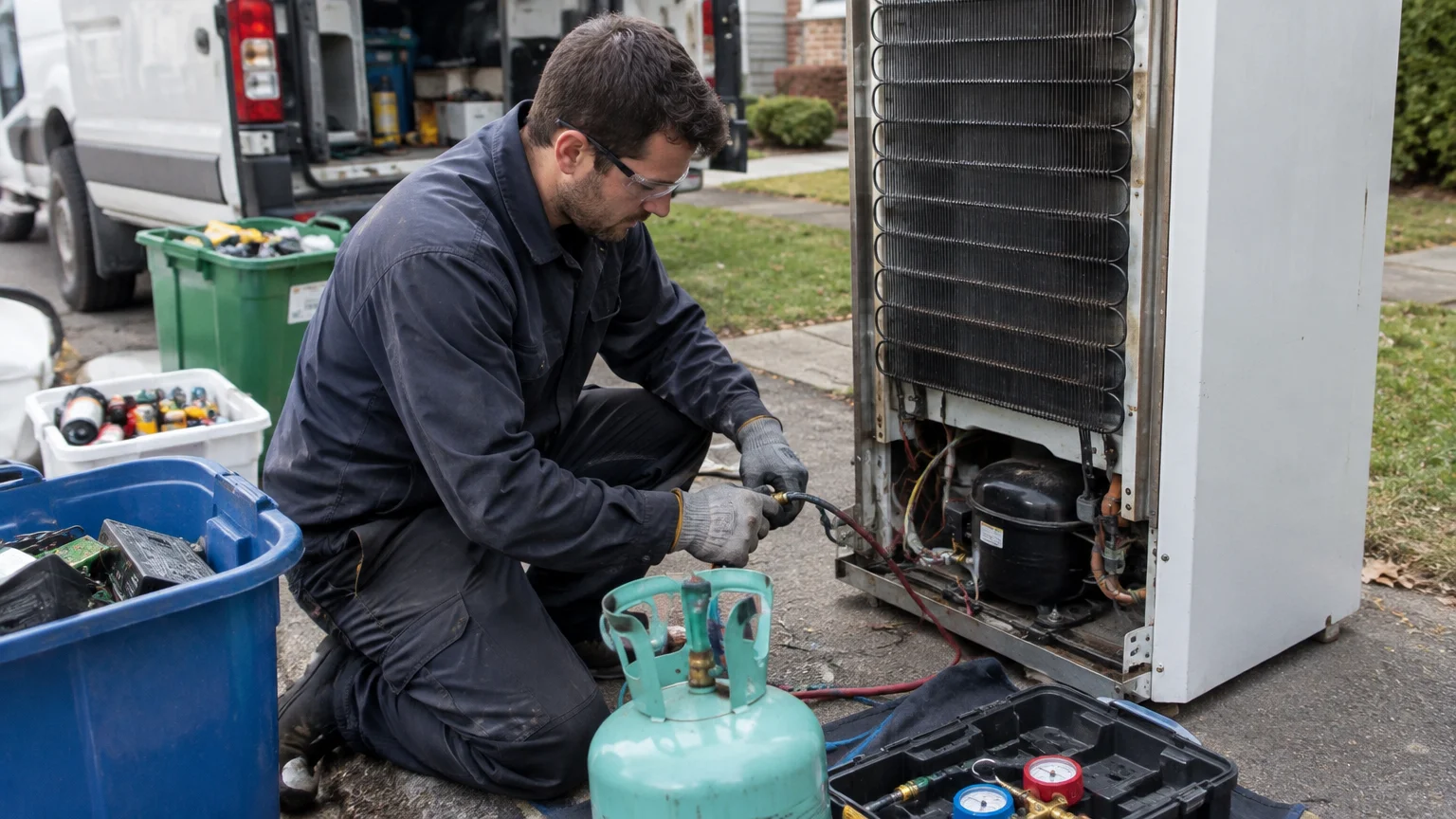
Refrigerators need special care because their cooling systems contain refrigerant. Refrigerant is a chemical that moves heat from inside the refrigerator to the outside. Local guidance should be checked before the unit is taken apart or sent for recycling.
Refrigerant recovery and safe removal
A homeowner should not cut cooling lines or puncture a compressor. A compressor is the part that helps move refrigerant through the cooling system. These actions can hurt people, damage equipment, and release refrigerant.
Keep the refrigerator upright when possible. Secure the doors during movement. Before pickup, remove food, shelves, bins, and other loose items. Wiping the inside can help reduce odors and mold.
Unplug the unit only as directed by the pickup provider. If it has a water line or ice maker, handle the line with care. A qualified recycling partner can recover the refrigerant and manage the compressor, oils, and other cooling parts.
The outer cabinet can then enter a separate recycling process. This is one reason refrigerator removal differs from regular household waste collection. The cooling system must be handled before many other materials can be recovered.
Recycling metal, plastic, glass, and electronic components
After safe preparation, a refrigerator may be taken apart for material recovery. Steel cabinets, copper tubing, aluminum parts, glass shelves, plastic bins, and wiring may be sorted. Electronic control boards may need a special recycling stream.
Not every part can be reused. Dirt, damage, mixed materials, and contamination may limit recovery. Careful sorting still gives the appliance a better outcome than sending the whole unit to a landfill.
A working refrigerator may be suitable for donation or reuse. The receiving group may check its age, condition, energy use, and safety. Morgan Hill Junk Removal can explain the possible removal path for homeowners, landlords, and business owners.
Can Washers, Dryers, and Dishwashers Be Recycled?
Yes, washers, dryers, and dishwashers can often be recycled, repaired, donated, or used for parts. Their next step depends on their condition, age, cleanliness, design, and local facility rules. Most contain a large amount of recoverable metal.
Which parts are commonly recovered and reused
Washers and dryers often contain steel frames, drums, motors, wiring, aluminum, and copper. Dishwashers may contain stainless steel, plastic panels, pumps, heating parts, and electronic controls. Some parts may help repair another appliance. Other parts may be processed as scrap material.
A working appliance may have a better next use than a broken one. A donation group, repair shop, or reuse center may accept it after checking its safety and condition. Owners should share details about leaks, noise, rust, missing parts, and other faults.
Dryers need extra care because lint and heat damage can create safety risks. Do not connect or test a broken dryer unless you have the right skills. The same rule applies to washers with water leaks or damaged power cords.
How appliances are separated at recycling facilities
At a recycling facility, workers or machines may separate metal from plastic, wiring, glass, and smaller parts. Some appliances are compacted or shredded only after liquids, hazardous parts, and electronic items are removed.
Before pickup, empty pockets and remove loose racks or items. Clean visible food or dirt when practical. Do not take apart motors, sealed systems, or wiring without proper training. A heavy appliance can cause cuts, strains, electric shock, or crushed fingers.
A washer and dryer pickup service should explain where appliances go after collection. Morgan Hill Junk Removal can help customers review removal options for homes, rentals, offices, and renovation projects across the Morgan Hill area. Service areas may include Downtown Morgan Hill, Jackson Oaks, Gilroy, San Martin, Coyote, Hollister, and nearby communities.
What Happens to Stoves and Other Large Appliances?
Stoves, ranges, ovens, and similar appliances may be donated, repaired, recycled, or taken to an approved facility. The safest choice depends on whether the unit uses gas or electricity. Its condition and connection also matter.
Preparing gas and electric appliances for pickup
A qualified person should disconnect a gas appliance when required. The gas supply must be shut off, and the connection should be checked for safety. Never cut a gas line or move a connected range through a doorway.
Electric stoves can also be hard to move. Some use a high-voltage connection. Power must be disconnected safely before the appliance is handled. A damaged cord, hot surface, or broken control can create danger during removal.
Owners can clear cookware, racks, trays, and loose items before pickup. They can also measure narrow doors and hallways. This helps the crew plan a safe route and protect walls and flooring.
Donation, refurbishment, recycling, and disposal options
A clean, working stove may be accepted by a reuse group or donated to a household in need. A repair shop may fix certain models. Appliances that cannot be reused can often be separated for metal recovery.
Dishwashers, ranges, and other large units contain mixed materials. Their recycling path may include steel, copper, aluminum, wiring, glass, and plastic. Parts with grease, damage, or contamination may need special handling.
The same idea applies to other bulky items, including hot tubs. A hot tub may need draining, disconnection, cutting, and material sorting. It should not be treated like a small appliance. For any large item, a removal service can review access, weight, connections, and safe handling before pickup.
What Appliance Disposal Rules Should Homeowners Know?
Appliance disposal rules vary by state, county, city, facility, and appliance type. Refrigerants, electronics, oils, batteries, and gas connections may have separate rules. Homeowners should check local guidance or ask the pickup provider which rules apply.
Local requirements for refrigerants, electronics, and hazardous components
A refrigerator or freezer may need refrigerant recovery before recycling. Electronic controls and circuit boards may need an electronics recycling stream. Batteries, oils, cleaning chemicals, and damaged parts should not be mixed with regular household waste.
Rules may also cover curbside placement, bulk collection, transfer stations, and landfill acceptance. Some communities require appointments or limit the appliances they collect. A private facility may have its own preparation rules.
Keep manuals, model information, and proof of ownership when useful. Tell the service about leaks, broken glass, sharp edges, pest concerns, or difficult access. Clear details help prevent delays and unsafe surprises.
Why disposal rules can vary by appliance and location
A refrigerator has different risks from a dishwasher. A gas range has different connection needs from an electric dryer. Local agencies may also use different systems for bulk items and recyclable materials.
Advice from another city may not apply in Morgan Hill. Morgan Hill Junk Removal can help property owners understand practical steps for appliance removal in the local service area. The provider must still follow current facility rules and send regulated items to the proper handler.
A homeowner does not need a professional for every task. Emptying an appliance, cleaning it, measuring doorways, and removing loose shelves are usually simple jobs. Professional help is safer for gas lines, sealed cooling systems, high-voltage wiring, heavy lifting, stairs, and tight spaces.
How Can You Choose a Responsible Appliance Pickup Service?
A responsible appliance pickup service explains how it handles reuse, recycling, donation, and disposal. It should also ask about the appliance, access, connections, and possible hazards. Clear answers help owners choose a safer removal plan.
Questions to ask about recycling, donation, and disposal practices
Before scheduling, a homeowner can ask:
- Does the service sort appliances for reuse and material recovery?
- How are refrigerators and freezers handled before recycling?
- Are working appliances considered for donation or repair?
- Which appliances does the receiving facility accept?
- How should gas, water, electric, and cooling connections be handled?
- What should the homeowner remove before the crew arrives?
The service should avoid vague promises. It should explain that the final outcome depends on the appliance and receiving facility. A working appliance may be reused. A damaged unit may be taken apart for materials.
What to expect when scheduling appliance removal in Morgan Hill
During scheduling, share the appliance type, size, location, condition, and access route. Photos may help the provider understand stairs, narrow doors, elevators, gates, or other limits. Mention whether the appliance is connected or leaking.
On pickup day, clear loose objects from the area. Keep children and pets away from the work space. The crew may protect floors and guide the appliance through the property. Do not help lift unless the crew says it is safe.
Morgan Hill Junk Removal serves homes, rental properties, offices, and renovation sites in the Morgan Hill area. Responsible service means more than quick loading. It means choosing a sensible next step for the appliance and its materials.
Key Takeaways for Eco-Friendly Appliance Disposal
Eco-friendly appliance disposal starts with sorting. A working appliance may be reused or donated. A broken appliance may be repaired, stripped for parts, or sent to a recycling facility. Refrigerators need special care because refrigerant must be recovered safely.
A practical preparation checklist for refrigerators and other appliances
- Empty the appliance and remove loose shelves, racks, and bins.
- Unplug electrical units only when it is safe to do so.
- Do not cut gas lines, cooling lines, cords, or sealed systems.
- Tell the provider about leaks, damage, stairs, and tight access.
- Keep doors and walkways clear before the removal team arrives.
- Ask how reusable materials and regulated parts will be handled.
These steps help protect people, property, and the environment. They also make pickup easier for large appliances that are hard to move through a home or business.
When professional removal is the safer and more convenient option
A homeowner usually does not need professional help to clean an appliance or remove loose items. Professional removal is a better choice when the unit is heavy, connected, leaking, damaged, upstairs, or hard to move. Trained crews can also help reduce strain and property damage.
In conclusion, the best disposal path depends on the appliance and its condition. A careful service can connect reuse, donation, recycling, and proper disposal steps. Contact us today to arrange responsible appliance removal.
Key takeaways:
- Refrigerators need safe refrigerant handling before recycling.
- Washers, dryers, dishwashers, and stoves often contain recoverable materials.
- Gas, electrical, cooling, and hazardous parts need careful handling.
- Local rules can differ by appliance and location.
- A responsible pickup service explains where each appliance goes.
Frequently Asked Questions
How can someone get rid of an old refrigerator?
An old refrigerator can go to a reuse group, appliance recycler, or removal service. Do not cut or damage the cooling system. Empty the refrigerator and keep it secure until pickup. A qualified handler can recover refrigerant and send metal, plastic, glass, and wiring through proper channels.
Can a washer and dryer go in regular trash?
Large washers and dryers usually need bulk collection, a recycling facility, or an appliance removal service. Regular household bins are not made for their weight or mixed materials. Before pickup, empty the machines, remove loose items, and report leaks, damage, stairs, or tight access.
Is eco-friendly appliance disposal available for broken appliances?
Yes, broken appliances may still contain useful metal, wiring, plastic, glass, or parts. A facility will decide what can be recovered after checking the appliance. Eco-friendly appliance disposal does not mean every piece will be reused. It means the appliance receives a safer and more suitable handling path.
Should a homeowner disconnect a gas stove before removal?
Follow local safety rules and use a qualified person when gas disconnection is required. Gas lines should never be cut or forced apart. Tell the removal provider that the stove uses gas before pickup. This allows the job to be planned around safe disconnection and movement.
What happens to appliances after pickup?
The next step depends on condition, age, safety, and facility requirements. Working units may be donated or repaired. Others may be dismantled for steel, copper, aluminum, plastic, glass, wiring, and parts. Refrigerators may need refrigerant recovery before recycling. Some damaged materials must go to specialized facilities.
If you are unsure what you have, arrange an assessment before the appliance becomes a larger job. Morgan Hill Junk Removal can help you understand the next step.
If you are not sure what you are dealing with, it is worth having someone look at it before it turns into a bigger job. Get in touch with Morgan Hill Junk Removal today and we will tell you where you stand.