Appliance pickup for landlords helps clear old refrigerators, washers, dryers, stoves, and dishwashers during property changes. A trained removal team can handle safe loading, careful hauling, and proper disposal planning. Landlords should prepare the unit, confirm access, and ask how each appliance will be recycled, donated, or handled under local rules.
Property turnovers often move quickly. An old appliance can delay cleaning, repairs, inspections, and a new tenant’s move-in. A clear pickup plan helps owners, property managers, tenants, and maintenance teams understand what happens next.
This guide explains the process for rental homes, apartments, offices, and commercial properties. It also covers preparation, safety, disposal choices, and pickups across Morgan Hill, including Downtown Morgan Hill and Jackson Oaks. It also applies to nearby areas such as Gilroy, San Martin, Coyote, Hollister, and other local communities.
Table of Contents
- What Does Appliance Pickup for Landlords Typically Include?
- When Should Landlords Schedule Appliance Removal?
- How Can Property Managers Prepare Appliances for Pickup?
- What Happens During a Professional Appliance Pickup?
- Which Appliance Disposal Rules Should Landlords Know?
- Can Old Appliances Be Recycled or Donated?
- How Much Does Appliance Pickup Cost for Rental Properties?
- How Can Landlords Coordinate Pickup Across Multiple Properties?
- What Should Property Managers Look for in an Appliance Removal Service?
- How Can Professional Appliance Pickup Simplify Property Turnovers?
- Frequently Asked Questions
What Does Appliance Pickup for Landlords Typically Include?
Common appliances accepted for pickup
Appliance pickup usually covers large household items that are hard to move alone. Common items include refrigerators, freezers, washers, dryers, ovens, ranges, stoves, and dishwashers. Some providers may also accept water heaters, compact appliances, and other large items after reviewing the job.
The service often includes lifting, carrying, loading, hauling, and disposal planning. Landlords should list every item before scheduling. A full list helps the crew bring the right tools and plan for stairs, narrow halls, gates, elevators, or shared parking areas.
Morgan Hill Junk Removal can help landlords plan appliance removal during a turnover. The same plan may help with a house cleanout, garage cleanout, or larger junk removal job when appliances are mixed with other debris.
How pickup services differ from curbside disposal
Curbside disposal often requires the owner or tenant to move the appliance outside. That can be unsafe for heavy refrigerators and laundry machines. Curbside programs may also have set pickup days, item limits, preparation rules, or separate steps for cooling equipment.
A professional pickup brings the removal work to the property. The crew may move items from a kitchen, laundry room, basement, garage, office, or commercial space. Landlords should still confirm what the provider accepts and whether a qualified person must disconnect the appliance first.
When Should Landlords Schedule Appliance Removal?
Tenant move-outs and unit turnovers
The best time to schedule appliance removal is when the landlord knows an item will not stay. Early planning gives the manager time to arrange access, repairs, cleaning, and final checks. It also keeps an unwanted appliance from sitting in a hall or storage room.
A move-out inspection may reveal broken or abandoned appliances. The manager should record the item, its location, and its condition. Photos can help the owner, tenant, maintenance team, and removal provider understand the work before pickup.
For apartment buildings, managers should consider quiet hours and shared areas. Pickup may need approval from a building owner, site supervisor, or homeowners association. Clear notice can reduce blocked doors, parking problems, and complaints from other residents.
Renovations, replacements, and emergency situations
Renovations may create several appliances for removal at once. A replacement job can include a refrigerator, range, dishwasher, washer, and dryer. Scheduling pickup after the new items arrive can prevent gaps in the unit’s basic services.
Emergency removal may follow a leak, fire, flood, power problem, or serious breakdown. The appliance should not be moved until the area is safe. Property managers should check for standing water, broken glass, exposed wires, gas concerns, and structural damage first.
If an appliance may have caused damage, managers should take photos before moving it. They should also keep repair notes and tell the pickup team about any unsafe condition. This helps everyone plan the work with care.
How Can Property Managers Prepare Appliances for Pickup?
Disconnecting and emptying appliances safely
The appliance should be empty, dry, and ready for safe movement. Remove food, clothing, dishes, shelves, loose parts, and personal items before the crew arrives. Landlords should not disconnect gas lines or electrical systems unless a qualified person can do so safely.
Refrigerators and freezers may contain refrigerant. Refrigerant is a substance used to cool the inside of the unit. It must be recovered with the right equipment. A landlord should never cut cooling lines, release the substance, or ask an untrained person to change the system.
Washers and dishwashers may hold water in hoses or pumps. Dryers may contain lint and may use gas or electricity. A maintenance worker or qualified technician should handle disconnection when the task could cause injury or property damage.
Preparing access points, parking, and building staff
Clear a path from the appliance to the loading area. Doors, gates, elevators, halls, and stairwells should be unlocked or ready for use. Move items near the path before pickup to reduce damage and delays.
Building staff should know the arrival window and removal location. On larger properties, a manager may need to reserve an elevator or loading space. Tell the provider about stairs, tight turns, long walks, gates, and parking limits.
If the property has tenants, give them clear notice. Ask them to keep cars, boxes, and personal items away from the work path. A few simple steps can make pickup safer and faster.
What Happens During a Professional Appliance Pickup?
Arrival, inspection, and removal procedures
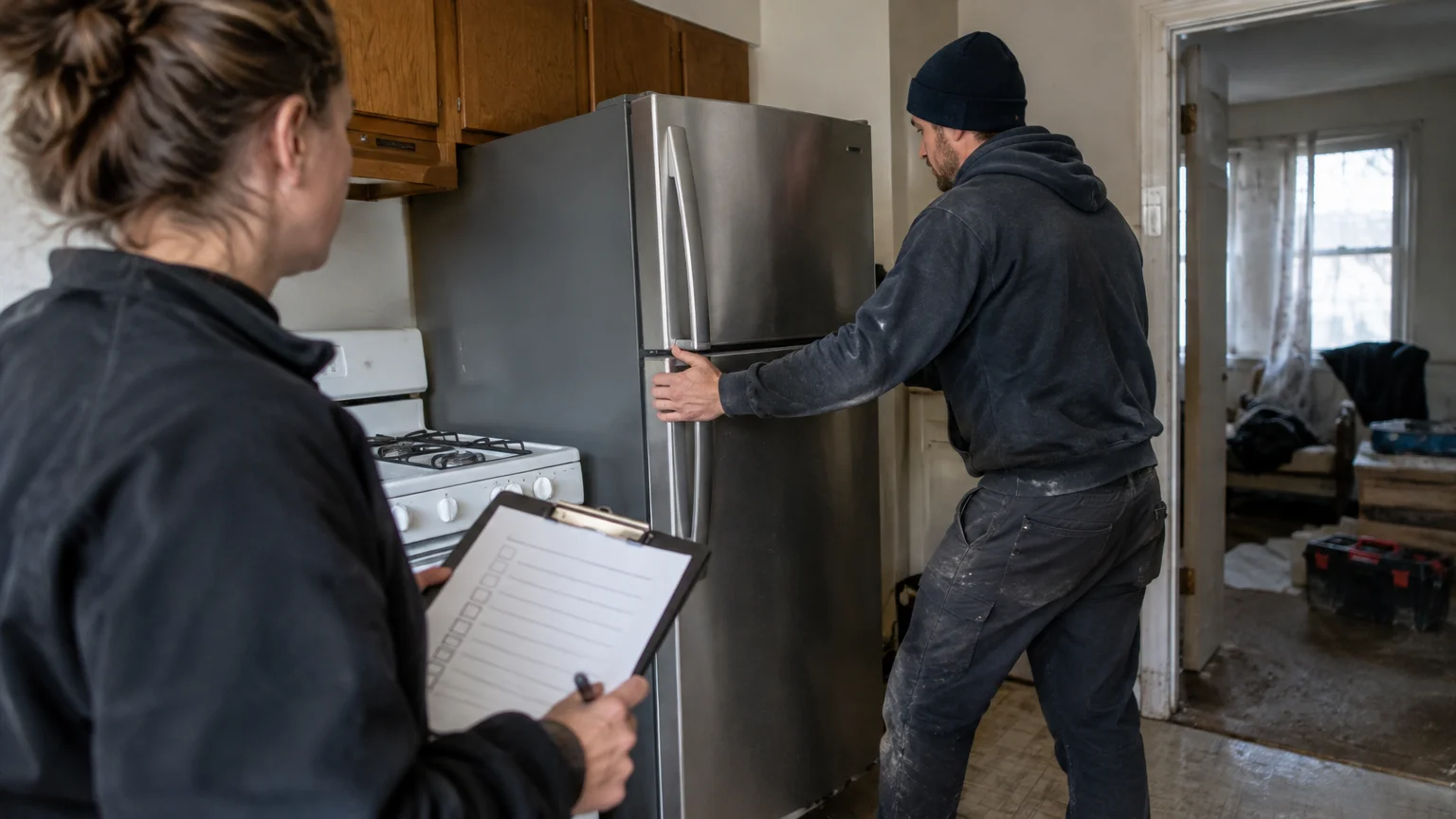
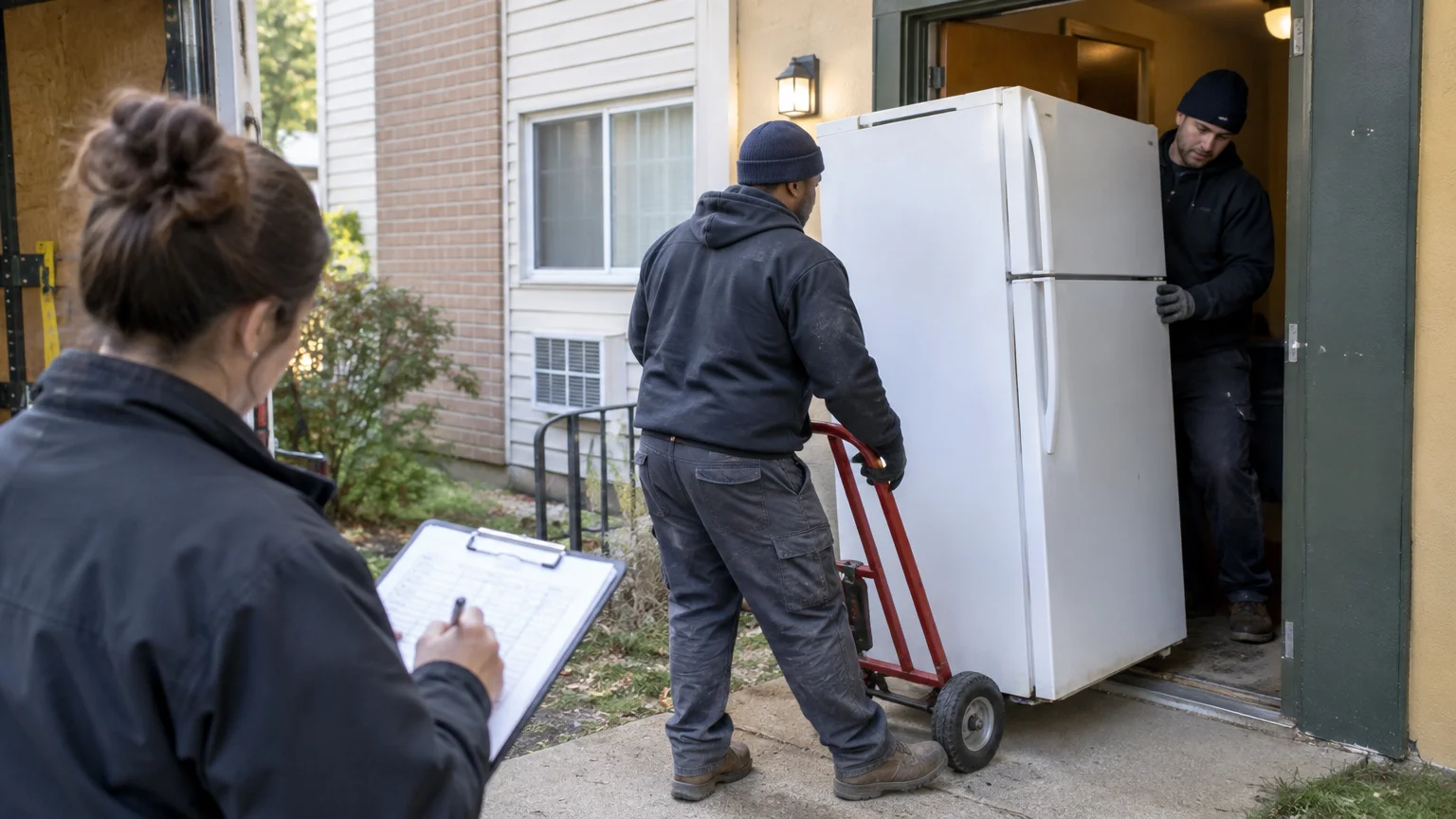
A professional pickup often starts with a review of the appliance and the route out. The crew checks the item, confirms what was requested, and looks for safety concerns. The team may use hand trucks, straps, ramps, blankets, or other moving tools.
The appliance is then moved and loaded for transport. Large units may need more than one worker. If the item is different from the original description, the provider may need to review the changed job before work continues.
Landlords should give clear instructions about items that must stay. Labels, notes, or separate rooms can help prevent mistakes. A short property checklist also helps the manager confirm that the appliance came from the correct unit.
Protecting floors, walls, doors, and common areas
Heavy appliances can damage floors, trim, drywall, doors, and elevator walls. A careful crew uses safe methods to lower these risks. Property managers should ask how the team protects shared areas and handles tight exits.
The route should be checked after removal. The manager can look for marks, loose parts, water, or debris. If a problem appears, report it soon and keep photos for the property record.
In a shared building, the crew should keep doors and halls clear. It should also avoid blocking fire exits or tenant access. These simple checks help protect the property and its residents.
Which Appliance Disposal Rules Should Landlords Know?
Refrigerant, oil, and hazardous component considerations
Some appliances contain materials that need special handling. Refrigerators and freezers may contain refrigerant. Compressors can contain oil, while older appliances may have parts that need controlled disposal.
The Environmental Protection Agency says refrigerant from household appliances must be recovered before disposal or recycling under applicable federal rules. Landlords can review the EPA refrigerant management requirements when planning refrigerator or freezer removal.
Appliances with broken glass, leaking fluids, sharp edges, or damaged wiring need extra care. Tell the removal provider about these problems before pickup. Never hide a hazard inside an appliance or place loose hazardous materials inside it.
Local disposal requirements and documentation
Disposal rules can differ by city, county, landfill, transfer station, and utility program. Some places have special rules for refrigerators, freezers, air conditioners, and other cooling equipment. A property manager should ask which rules apply at the pickup location.
Records can help owners manage several properties. Useful records may include the property address, unit number, pickup date, item list, and disposal or recycling details supplied by the provider. Morgan Hill Junk Removal can explain the next steps for appliance removal and nearby areas.
Managers should keep records with the unit’s turnover file. This can help answer owner questions and show when an item left the property. It also makes future pickups easier to plan.
Can Old Appliances Be Recycled or Donated?
Appliances commonly suitable for recycling
Many appliances contain steel, aluminum, copper, glass, and other materials that may be recovered. Recycling means processing an old item so useful materials can enter another manufacturing process. The appliance must still be prepared correctly before it reaches a recycling facility.
Recycling is often considered when an appliance is broken, old, incomplete, or unsafe to use. Refrigerators and freezers need special care because of refrigerant and other cooling parts. Ask whether the item will go to a recycling facility or another approved destination.
A recycling plan may also help keep bulky items out of an illegal dumping area. Landlords should not assume every facility accepts every appliance. Acceptance rules should be confirmed before the item is moved.
When donation, resale, or reuse may be possible
Donation or reuse may be possible when an appliance works well, is clean, and meets the receiving group’s rules. Some groups do not accept missing parts, heavy damage, or poor safety records. Confirm acceptance before moving the item.
Resale may work for newer appliances with clear ownership and a known service history. Waiting for a buyer can delay a turnover, however. If the unit must be ready soon, a planned pickup may be more useful than storing the appliance for an unknown time.
Landlords should also think about storage space and tenant schedules. A working appliance is not always easy to donate on short notice. A clear deadline helps the manager choose between reuse, donation, recycling, and removal.
How Much Does Appliance Pickup Cost for Rental Properties?
Factors that affect removal pricing
Appliance removal pricing varies by the job. Providers may consider the number of items, size, weight, location, stairs, distance to the truck, labor needs, and disposal method. Refrigerators and freezers may need extra handling because of their cooling systems.
A single ground-floor appliance may need a different plan than several units in a multi-story building. Tight halls, long carries, elevator rules, and limited parking can also affect the work. The best way to understand the charge is to share complete job details when getting in touch.
Landlords should describe the property, appliance types, access points, and preferred timing. Clear information helps the provider review the work and confirm service details before arrival. Photos may also help when access is tight or the appliance is damaged.
Comparing per-appliance, volume-based, and recurring service options
Some providers review jobs by appliance, while others consider total volume or labor. A recurring arrangement may help managers who handle regular turnovers. The terms should still match the property’s real needs. Ask what is included in the planned service.
A written service summary can reduce confusion. It should list the pickup location, items included, access instructions, timing, and special handling needs. Landlords should compare the full service plan rather than one detail alone.
How Can Landlords Coordinate Pickup Across Multiple Properties?
Creating a consistent property turnover process
A simple turnover process helps property managers handle appliance removal the same way each time. Start with an inspection, item list, photos, access notes, and a target pickup date. Then share the same details with maintenance staff and the removal provider.
A checklist may include:
- Appliance type, location, condition, and unit number
- Disconnection status and known safety concerns
- Stairs, elevators, gates, parking, and loading instructions
- Items that must stay at the property
- Preferred timing and required completion records
The checklist should be easy for owners, leasing staff, cleaners, and repair workers to use. Consistent records help prevent missed items and repeat visits. They also help new staff understand the property’s normal process.
Managing scheduling, access, and service records
Managers with several properties should group work when it makes sense. A shared calendar can show move-out dates, repairs, cleaning, inspections, and appliance pickups. Leave enough time for access problems or changes in the unit.
Each completed job can be recorded by property and unit. Notes may include the item removed, date, provider, and final destination information. This record can support owner reports and help the manager plan future turnovers.
It also helps to name one person as the main contact. That person can share access notes, approve changes, and confirm completion. Clear responsibility prevents missed messages between owners, tenants, and vendors.
What Should Property Managers Look for in an Appliance Removal Service?
Licensing, insurance, and responsible disposal practices
A property manager should ask whether the provider is properly registered and insured for the work. Requirements may vary by location and service type. The manager should also ask how the provider handles refrigerators, freezers, damaged units, and items with special disposal needs.
Responsible disposal means the item goes to an appropriate destination instead of an unsafe place. A provider should explain its general process in plain words. Landlords should be careful when answers about refrigerant, recycling, or records are unclear.
Service reliability, communication, and property protection
Good communication matters when a unit must be ready for a new tenant. The provider should confirm the requested items, access details, and arrival plan. The property manager should also know who to contact if the job changes.
Property protection matters just as much. Look for careful loading, respect for tenants and neighbors, and attention to shared areas. Reviews and references may help, but managers should still ask direct questions about the property.
A strong service plan should cover more than lifting. It should address access, item limits, hazards, disposal steps, and completion notes. These details matter when a landlord manages many units.
How Can Professional Appliance Pickup Simplify Property Turnovers?
Benefits for landlords, managers, tenants, and maintenance teams
Professional appliance pickup can reduce the physical work needed during a turnover. It can also help keep halls, garages, storage rooms, and units clear. This gives maintenance and cleaning teams a better path to finish their work.
Tenants may face fewer delays when an old appliance must leave before a replacement arrives. Owners may have a clearer record of what was removed. Managers can use a planned service for rental homes, apartment buildings, offices, and commercial spaces across the Morgan Hill area.
The process can also reduce the chance that a heavy item sits in a shared space. It gives each person a clear task and time frame. That makes turnover work easier to track from inspection through final cleaning.
Key takeaways for planning the next appliance removal
- List each appliance and its exact location before scheduling.
- Confirm who will disconnect gas, water, or electrical connections.
- Share stairs, elevators, gates, parking, and loading details.
- Ask how refrigerators and freezers will be handled.
- Keep pickup records for each property and unit.
For landlords, Morgan Hill Junk Removal can help organize appliance pickup as part of a wider property cleanout or junk removal plan. A clear item list and safe access path make the process easier for everyone.
Frequently Asked Questions
Do landlords need to empty appliances before pickup?
Yes. Landlords should remove food, clothing, dishes, shelves, loose parts, and personal items before the crew arrives. The appliance should be dry and ready to move. A qualified person should handle gas, water, or electrical disconnection when needed. Tell the provider about leaks, damage, or sharp parts.
Who removes refrigerant from an old refrigerator?
Refrigerant should be recovered by a trained person with suitable equipment. Landlords should not cut cooling lines or release refrigerant. Before scheduling refrigerator removal, ask how the provider handles refrigerant and where the unit will go after pickup.
Who takes old freezers from rental properties?
A professional appliance removal provider, recycling facility, utility program, or local waste service may accept old freezers. Rules differ by location. The property manager should confirm acceptance, preparation steps, and pickup limits before moving the freezer or placing it outside.
Can landlords donate working appliances after a tenant moves out?
Sometimes. Donation depends on the appliance’s condition, age, cleanliness, safety, and the organization’s rules. Confirm acceptance before transport. If donation would delay the next tenant’s move-in, planned appliance removal may be the more practical choice.
Is appliance pickup useful during an eviction or foreclosure cleanout?
Yes. Appliances are often among the heaviest items left during an eviction or foreclosure cleanout. A coordinated service can remove appliances with furniture, household goods, and other debris. The property manager should confirm ownership, access, hazards, and required records before work begins.
Contact us to arrange appliance pickup for a rental property or multi-unit turnover. Find out more about our appliance removal in Morgan Hill.